

The Brahmaputra could become an increasingly important link between India’s Northeast, Bhutan and wider regional markets. Discussions between New Delhi and Thimphu on expanding inland waterway connectivity through Assam point to an opportunity that extends beyond transport infrastructure: the creation of a more integrated economic corridor connecting a landlocked Himalayan economy with regional trade routes.
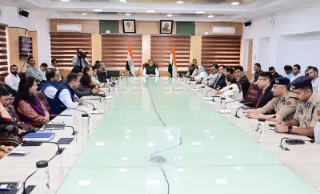
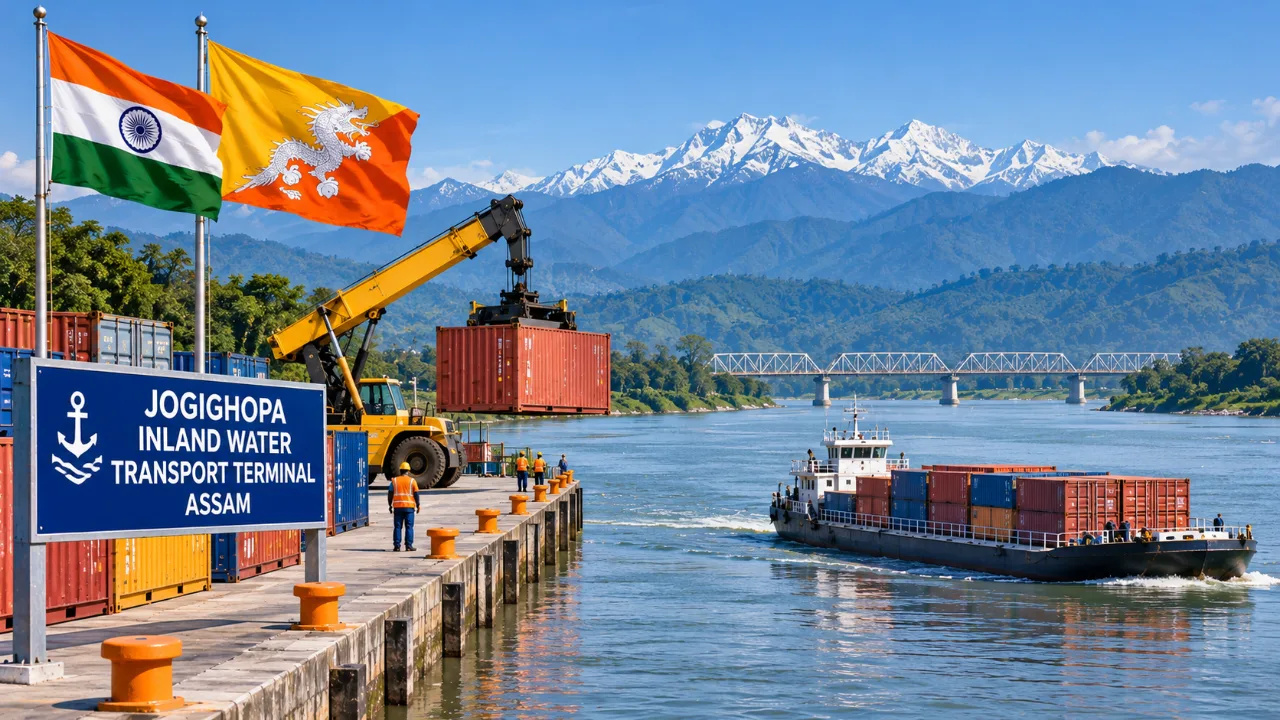
The proposal centres on India's National Waterway-2, which runs along the Brahmaputra, and the Inland Water Transport Terminal at Jogighopa in Assam. During a bilateral meeting, Union Minister for Ports, Shipping and Waterways Sarbananda Sonowal and Bhutan's Infrastructure and Transport Minister Lyonpo Chandra Bahadur Gurung discussed ways to improve cargo movement through the river network, including the possible integration of the Manas and Sankosh rivers.
For Bhutan, the economic importance is straightforward. As a landlocked country, it depends heavily on cross-border road transportation for imports and exports. An additional route through Assam could offer greater flexibility, particularly for commodities such as agricultural produce, construction materials, minerals and manufactured goods. It could also connect Bhutanese businesses with transport networks extending towards Bangladesh and other regional markets.
For India, the opportunity is equally significant. Assam's geographical position makes it a natural link between the northeastern states, Bhutan and Bangladesh. Better utilisation of the Brahmaputra would strengthen the region's role in cross-border commerce and help move economic activity beyond the conventional dependence on road transport.
Jogighopa is central to this possibility. Located approximately 91 kilometres from Bhutan's Gelephu region, the terminal was inaugurated in February 2025. Built at a cost of more than Rs 82 crore, it has a reinforced concrete jetty, cargo-handling equipment and facilities for storage and logistics. It is connected to the Jogighopa Multimodal Logistics Park and forms part of India's wider effort to develop inland waterways as an alternative freight network.
Its location is particularly relevant as Bhutan advances plans for Gelephu Mindfulness City. The proposed development is intended to create a new centre of economic activity in southern Bhutan. Improved connectivity with Jogighopa could support the movement of goods, encourage investment and provide businesses in the region with access to a larger logistics network. The proximity between the two locations gives the waterway proposal an economic dimension that extends beyond conventional bilateral trade.
The potential benefits are not limited to Bhutanese exports. Assam and neighbouring northeastern states could gain from increased cargo movement, logistics services, warehousing, transport operations and associated employment. A more active inland waterway network could also create opportunities for local producers by improving access to markets outside the region.
The larger strategic value lies in connecting infrastructure that has often been developed as separate national or regional projects. National Waterway-2, the Jogighopa terminal, road networks, the proposed rail connectivity between India and Bhutan, and the existing trade arrangements could together form a more integrated transport system. Such integration would allow goods to move through different modes depending on cost, distance, cargo type and destination.
This is particularly important for the Northeast, where geography has historically complicated the movement of goods. The region's economic potential cannot be fully realised through isolated infrastructure projects. Roads, railways, waterways and border facilities must function as parts of a connected logistics system. The Brahmaputra offers an opportunity to build precisely that kind of network.
There is, however, a distinction between identifying potential and establishing a functioning trade corridor. The recent discussions remain exploratory. The commercial viability of using the Manas and Sankosh rivers will require technical assessments, navigation studies and coordination between the two governments. Seasonal water levels, sedimentation, dredging requirements, cargo-handling facilities and the availability of suitable vessels will all influence the feasibility of expanded operations.
The economics of transportation will be equally important. Waterways can be cost-effective for bulk commodities, but cargo must first reach river terminals and then be transferred to other transport modes. If road connections, customs procedures and handling facilities create delays or additional expenses, businesses may continue to prefer established road routes. The success of the initiative will depend on whether it offers a genuinely competitive alternative.
Bhutan's private sector will therefore play an important role. Infrastructure alone cannot generate cargo volumes. Exporters need predictable customs procedures, reliable schedules, competitive freight rates and access to storage and processing facilities. The government-to-government discussions must eventually translate into arrangements that businesses can use regularly.
The initiative also has implications for India-Bangladesh connectivity. The Brahmaputra is already part of a wider inland waterway network linked to the Indo-Bangladesh Protocol routes. Improved cargo movement through Assam could strengthen the movement of goods between the three countries and provide Bhutan with additional access to regional markets. The Jogighopa terminal was developed with this wider connectivity in mind, making it an important component of India's regional logistics ambitions.
The environmental dimension must also receive attention. The Brahmaputra is a dynamic river system with complex hydrological conditions and ecological importance. Expanding navigation, dredging and cargo infrastructure will require careful planning to minimise disruption to river habitats and local livelihoods. Sustainable development of the waterway must be treated as a core requirement rather than an issue to be addressed after commercial operations expand.
India's approach to connectivity with Bhutan has increasingly involved infrastructure, trade facilitation and institutional cooperation. The waterway initiative adds another dimension to this relationship. It offers a practical way to connect Bhutan's economic ambitions with India's northeastern infrastructure while creating opportunities for closer regional integration.
The next stage should focus on converting the discussions into a clear implementation framework. Technical feasibility, navigation reliability, customs coordination, private-sector participation and commercial viability will determine whether the proposal moves beyond its exploratory stage. The integration of river transport with road and rail networks will be essential to achieving consistent cargo movement.
The Brahmaputra has long shaped the geography, economy and communities of Assam. Its potential as a modern trade corridor offers an opportunity to give the river a larger role in regional development. For Bhutan, it could provide another route to external markets. For Assam, it could strengthen its position as a logistics gateway. For India, it offers a means of deepening economic integration with a close neighbour while advancing connectivity across the Northeast.
The real measure of success will not be the announcement of new waterways or the construction of additional terminals. It will be the regular movement of commercially viable cargo, lower logistics costs, stronger regional businesses and tangible economic benefits for communities along the route. If those conditions are achieved, the Brahmaputra could become more than a transport corridor. It could emerge as an important economic link connecting the eastern Himalayas with the wider regional economy.